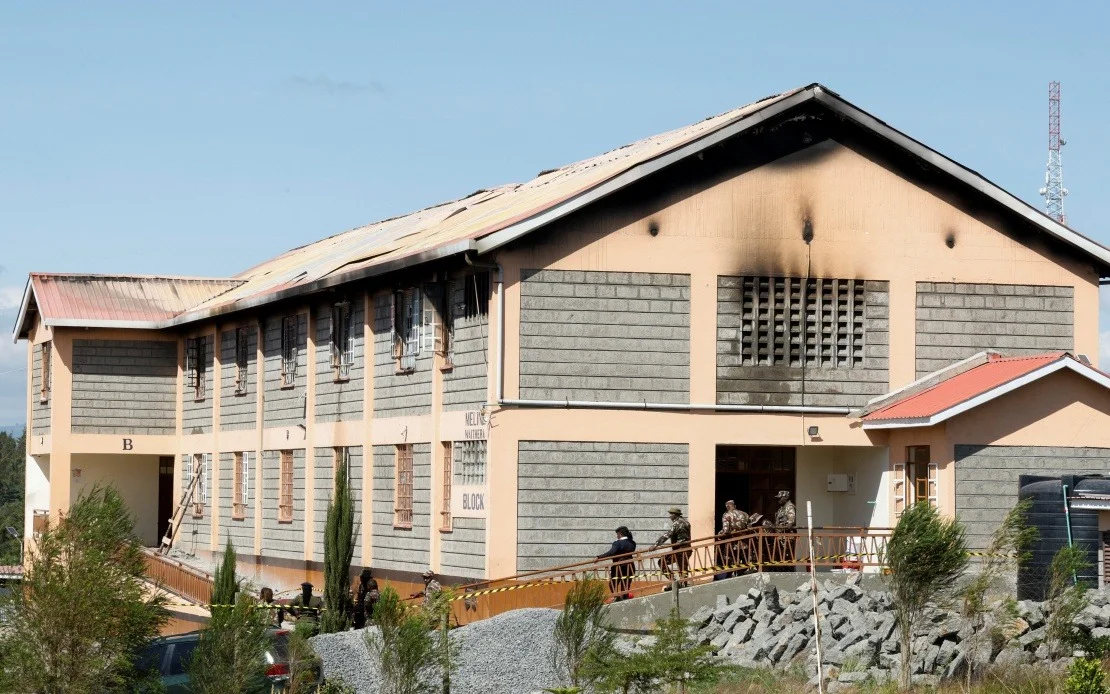
Since the opening of schools for the second term in 2026, Kenya is once again facing a painful wave of school unrest. As of today, several secondary schools have experienced strikes, walkouts, fires, closures, fear and disruption. The tragedy at Utumishi Girls Academy in Gilgil, where an estimated 16 learners lost their lives in a dormitory fire, has turned a recurring education concern into a national child safety emergency.
It is tempting to reduce this moment to one explanation: indiscipline among learners. But that would be too simple, too convenient and too dangerous considering that this is not the first time this is happening. The issue of learners’ unrest has been with us for years.
I agree that violence, arson and destruction of property must never be excused and that learners must be taught that grievances cannot be solved through harm, intimidation or destruction. But if our only response is punishment after crisis, sending them home and asking them to come back with parents or fines after the damages then we will continue reacting to fires and destruction instead of preventing the conditions that make them possible.
In 2016, the National Crime Research Centre documented more than 130 cases of secondary school infrastructure being burnt within about 15 weeks, largely during second term and even commissioned a research. Nearly a decade later, the pattern is speaking again. The question is; were the recommendation by the center implemented? Were there other interventions that we designed? And if none of these was done, then are we willing to listen differently this time?
This is Not Just a Discipline Crisis
Previously, the Ministry of Education has already acknowledged that some schools are facing tensions linked to examinations and learner anxiety. But from the reported cases, these incidences started a few weeks after the schools reopened for second term. So, is the examination fear still a factor this year? The Ministry has been calling for dialogue between teachers and students to enhance stronger guidance and counselling, mentorship, psychosocial support, student leadership structures, and inspections to enforce safety standards. I would be curious to read of any reports from this engagement and what has changed in the schools that have had structured dialogue.
From my point of view, school unrest rarely comes from one isolated cause. It may grow from a combination of pressure points including exam anxiety as previously indicated, weak communication between learners and administrators, poor living conditions, harsh disciplinary cultures, peer influence, unresolved grievances, weak counselling systems and unsafe boarding environments.
When learners do not have trusted ways to express concerns, frustration can move underground. If the school strategy is to only hear after a strike, then the system has already failed. We shouldn’t mistake silence in a school for peace. Sometimes it is pressure waiting for a trigger.
Safety Must Become Non-Negotiable

The recent dormitory fire has exposed a hard truth that in 2026, many learners are still living and learning in spaces that are not safe enough.
A 2024 Ministry of Education safety compliance assessment found serious concerns in boarding schools, including dormitories with grills on windows, single exits, inward-opening doors, congestion, inadequate sanitation, poor access to treated drinking water and weak compliance with safety standards. These are not small administrative gaps but life-and-death issues.
Every school must now answer basic but urgent questions: Do they have emergency exists in their dormitories and are they accessible? How do the doors open, outward or inward? Are windows usable during emergencies? Are learners trained on evacuation routes? Are fire drills conducted? Is there night supervision? Do they have safety committees and how often does the committee members to review learners’ safety? Are learners with disabilities included in emergency plans?
Learner Voice is Prevention
From our experience working with children and communities, one of the biggest lessons we have learnt is that conflict becomes dangerous when people feel unheard, unseen or trapped. Schools are no different.
Learners need structured, safe and trusted channels for raising concerns before frustration escalates. Student councils, class representatives, peace labs/ clubs, suggestion boxes, regular learner forums, confidential reporting systems and teacher-learner dialogue spaces should be practical and functional. This helps learners participate responsibly in the life of the school. It means teaching them that voice comes with responsibility, and leadership comes with accountability.
At Re-Imagining New Communities, our Children-Led Community Peace Labs have proven that children can be powerful peace actors when they are equipped with the right tools that enables them to identify early warning signs, mediate peer conflicts, support positive school culture, report safety concerns and model non-violent ways of solving problems. But they can only do this when teachers and school authorities stop seeing them only as potential troublemakers and begin seeing them as partners in building safer schools.
We Must Rethink Discipline
Discipline is necessary. But discipline must not be confused with fear, humiliation or control. True discipline should build responsibility, self-control, empathy, respect and accountability. Thus, teaching learners how to make better choices, repair harm and live with others. A purely punitive approach may remove a learner from school, but it does not necessarily repair the school culture that produced the crisis.
Kenya needs stronger restorative approaches in schools. Where learners cause harm, they must be held accountable. But accountability should include truth-telling, counselling, family engagement, repair of harm, community service where appropriate and reintegration plans. Schools must be firm without being cruel, protective without being authoritarian and disciplined without becoming violent.
Mental Health and Psychosocial Support Cannot Remain Optional
Many learners are carrying pressure that schools are not fully prepared to handle like family difficulties, poverty, bullying, grief, identity struggles, online pressure, fear of failure and emotional isolation. When this pressure is ignored, it can show up as aggression, defiance, violence or destructive peer behavior.
Guidance and counselling must therefore move from being a crisis response to becoming a core part of school life conducted by teachers and professionals who are trained in conflict management and trauma informed response.
What Must Be Done Now
First, the Ministry of Education should make school safety audits public, time-bound and enforceable. Schools that do not meet basic safety standards should not continue operating boarding facilities until corrective action is taken. This should not just be on paper but effected immediately
Second, every school should establish an early-warning system. This should include regular student forums, anonymous reporting, active student councils and clear procedures for responding to grievances.
Third, schools should strengthen mentorship and psychosocial support. Learners need trusted adults and safe spaces where they can speak before pressure turns into crisis.
Fourth, academic pressure should be managed through preparation, communication and support.
Fifth, teachers and school administrators need training in conflict transformation, restorative discipline, child protection, trauma-informed practice and difficult conversations. There need to understand and practice current tools on how to deal with learners.
Sixth, parents must be brought back into school life. The responsibility for safer schools cannot rest on principals and school administration alone. Therefore, parents, faith leaders, community organizations, boards of management, active alumni network and local leaders must help build protective ecosystems around learners.
Lastly, learners themselves must be trained as peacebuilders and peer mediators. Schools should invest in peace labs/clubs, student safety champions and children-led peace labs that help learners practice non-violent problem-solving.
Our Call
This moment is deeply connected to our work in peace education and child protection. Kenya cannot punish its way out of school unrest. We must build our way out of it by;
Building safer dormitories.
Building stronger learner voice systems.
Building emotionally supportive schools.
Building accountable discipline systems.
Building the capacity of teachers.
Strengthening parent-school-community partnerships.
The unrest in our schools is not only a warning about learners. It is a mirror held up to the systems around them.
Before another school burns, before another family grieves, before another learner is lost, Kenya must choose prevention over reaction.